

When did it all start?
A journey toward data sovereignty and privacy.

My memories may be fragmented, but one thing is certain: this story doesn’t have a clear beginning. Rather than a straight line, it’s a gradual transition from white to black. The present is defined; the starting point is elusive.
2009: the illusion of control
There were, however, revelations. It was 2009, shortly after Facebook arrived in Italy. I embraced it enthusiastically – sharing moments and communicating through real names, not avatars. Then came an event that called everything into question: a photo of me in a funny (not scandalous) situation appeared on someone I’d just met. My introverted nature couldn’t accept it staying there. When I politely asked them to remove it, my request was denied: our standards of acceptability differed.
The incident revealed a fundamental flaw in how we own our digital identity: control should not depend on the standards of others
Since then, my enthusiasm for social media has gradually waned. I used Facebook less and less until I deleted my account entirely. New platforms arrived, but none convinced me to return. This wasn’t just a personal retreat; it was the realization that handing over control of our image to platforms meant trading our sovereignty for connection.
2013: reclaiming identity
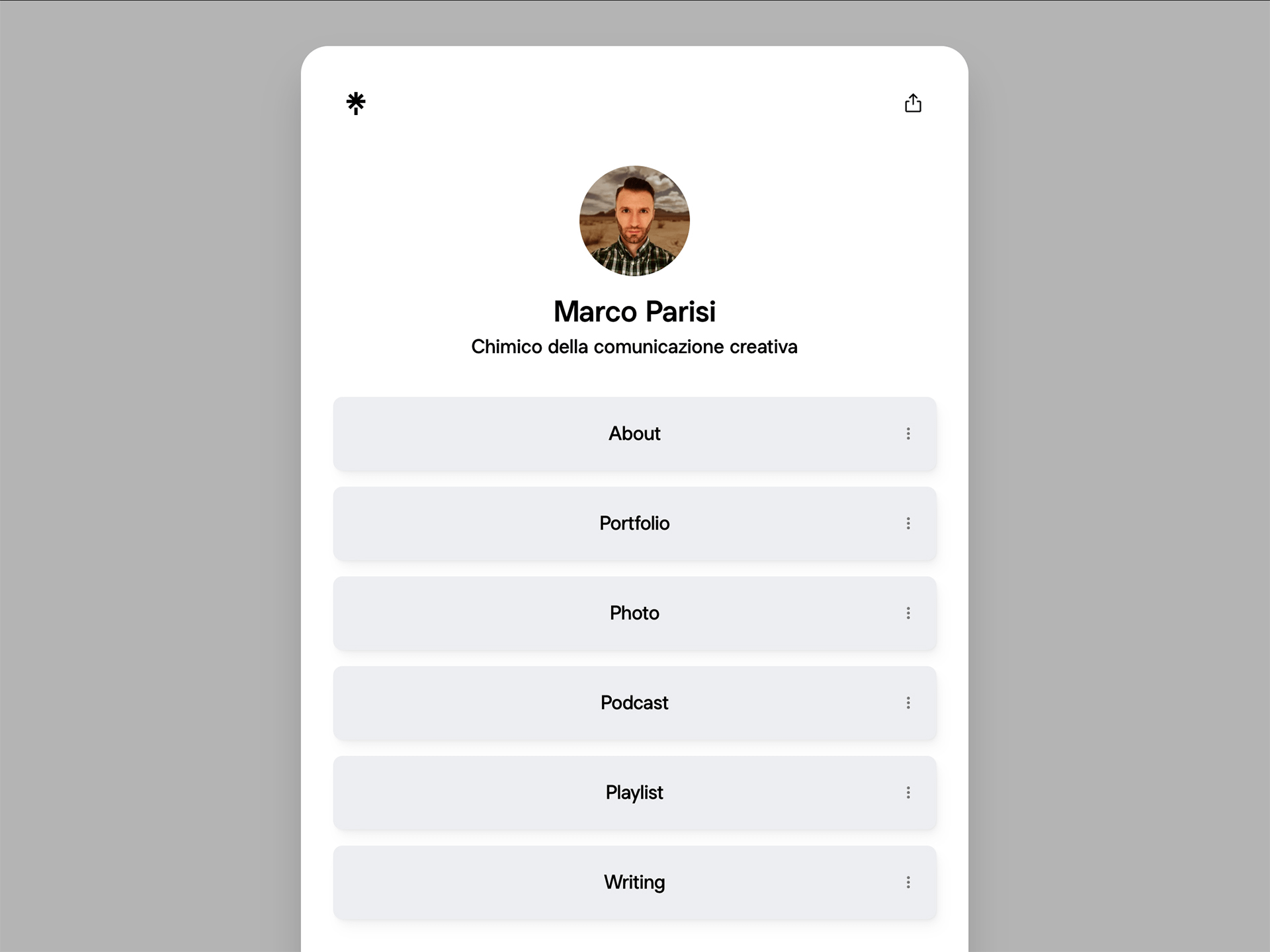
Years passed. In 2013, driven by this need for sovereignty, I sought to build a tool that returned control to the user: a digital identity where you are the owner, not the product. While working at a publishing company, I met Marco Orlandin, a freelance developer. He helped with the technical side while I handled graphic design. We built a simple page: name, photo, profession, company, biography, and links to my resume, portfolio, etc. Something like a Linktree.
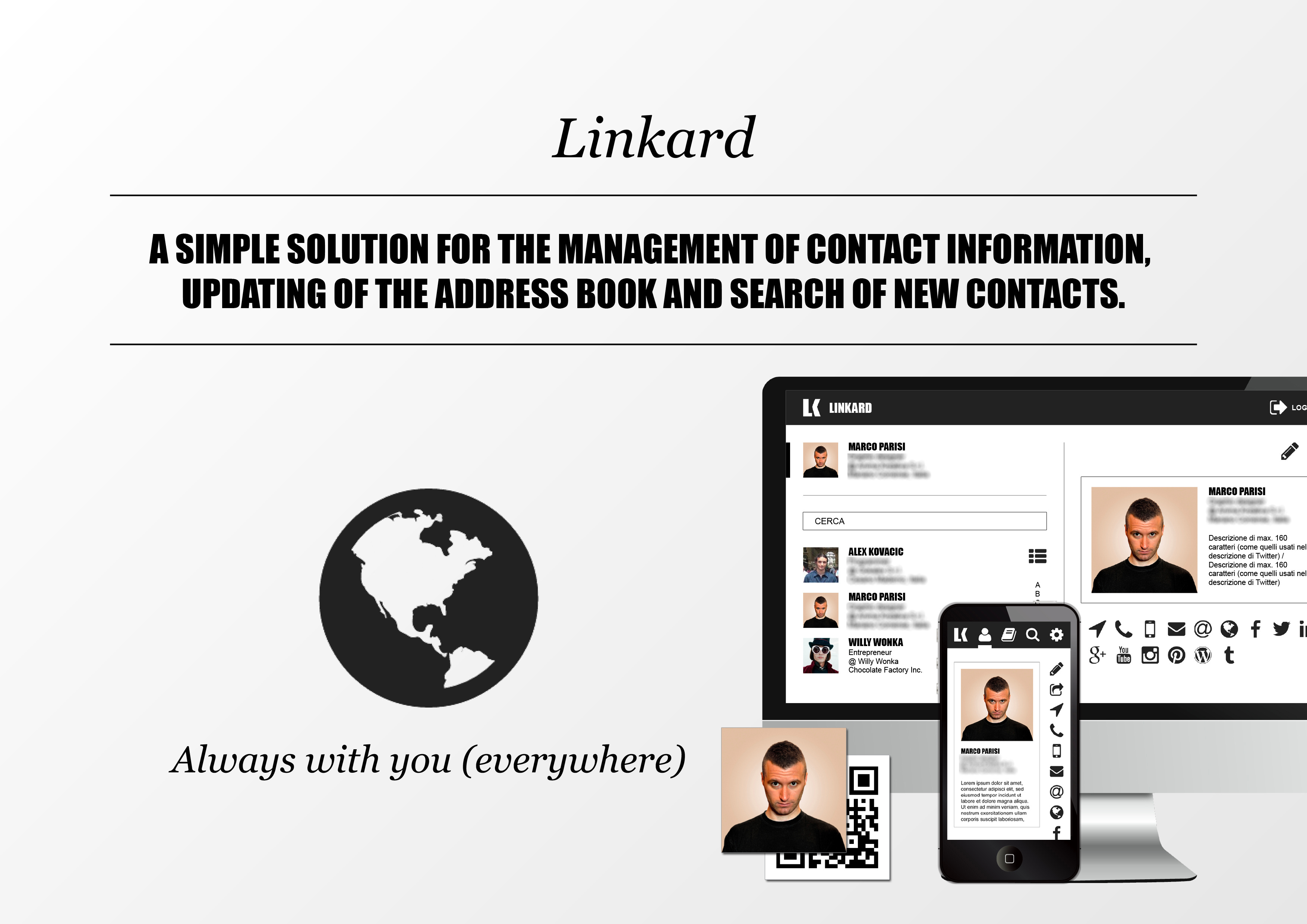
But we saw potential beyond a single page. What if it became a full-fledged contacts app? You could update your information once, and everyone would have access to current data regardless of platform. A unique digital profile. Not just another social media user, but a person introducing themselves directly. Control over your data. Deciding what was public and what stayed private. Marco embraced the idea. We developed mockups, a business model, pitch decks, presented at startup events. The result was classic: silence.
The world wasn’t ready. In an era dominated by the noise of social feeds, the value of owning your own data seemed invisible to a market prioritizing engagement over autonomy.
We were too far ahead of the digital culture. Meanwhile, our employer went bankrupt. Our paths diverged. The project, then called Linkard, was abandoned.
2021: the rebirth
Post-2020, the collective conversation shifted. As Big Tech, like Google and Apple, deepened its grip on our data for profiling and generative AI loomed. Privacy concerns were growing, even among niche audiences. The abstract concept of data sovereignty has become an urgent necessity. That dormant project began calling to me.
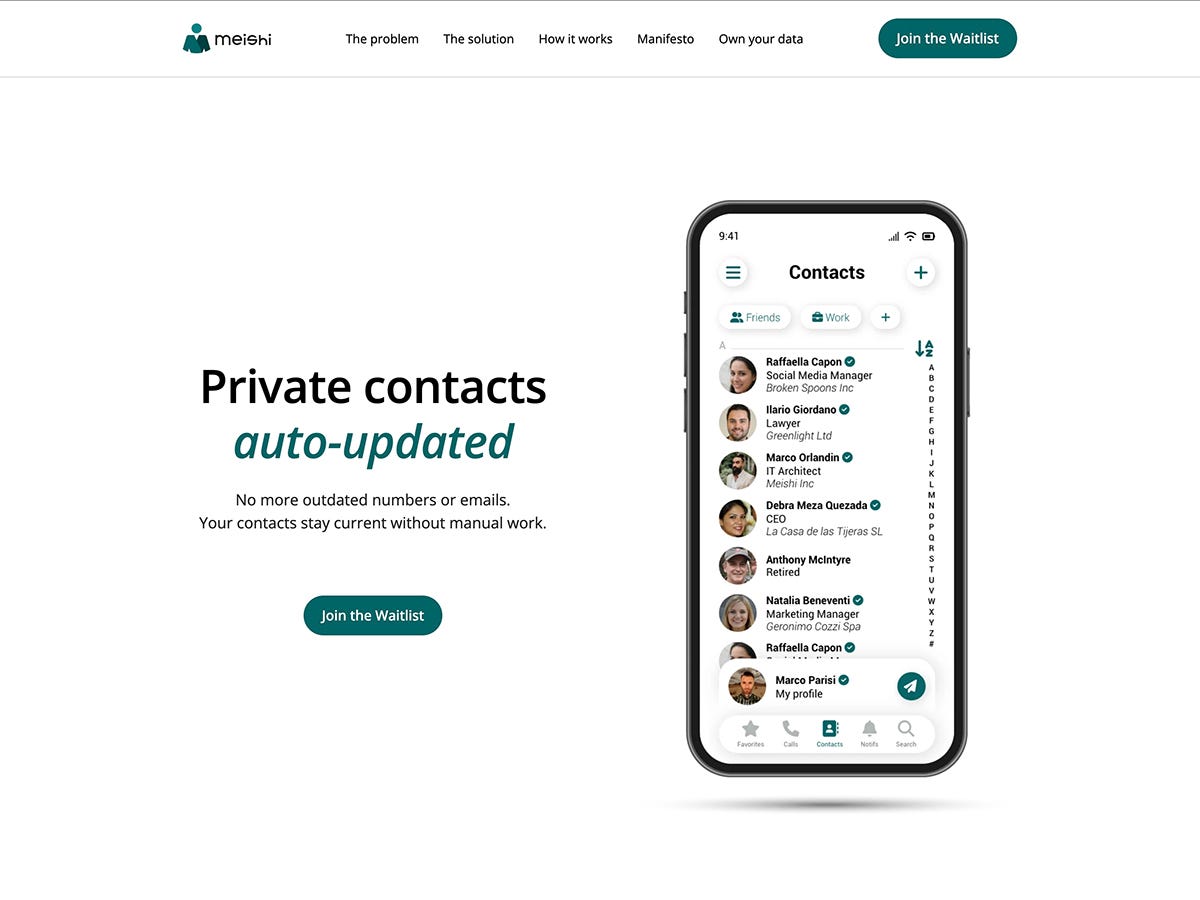
Recognizing the time had finally come, I reconnected with Marco. We relaunched the project with a new name Meishi, anchoring it not just in technology, but in the uncompromising values of privacy and data sovereignty.
Meishi is the tangible answer to the collective desire for data sovereignty, transformed into code. It proves that autonomy is possible when we refuse to accept exploitation of our identity as the status quo.
2024: the data sovereignty manifesto
During the lengthy review process, we realized that the code alone wasn’t enough. Technology without an ethical compass is just another weapon. We had to put our personal struggle down on paper: because the first step toward becoming masters of our own data is understanding exactly what we’re fighting for. So I wrote our manifesto. It contains all the fundamental questions underlying our project. Meishi isn’t just a privacy-first contacts app with automatic data updates. It’s the first step toward an ecosystem centered on these values, where you control your own data and no one – not even us – can access it.
2026: the awakening
The journey that took us from a frustrating photo on Facebook, through Linkard and Meishi, and finally to the manifesto taught us that building a tool for data sovereignty required more than just architecture; it required a collective awakening. So we realized we had to build a community. “Own Your Data” has become the logical next step on this journey. It’s our space to analyze tech news, political moves, and corporate strategies through the lens of data sovereignty.
If access to our data is restricted for commercial, regulatory, power, or security reasons, are we owners or just renters of our own lives? Data Sovereignty isn’t a gift – it’s a right we build ourselves. While you wait for the next post, I ask you:
Who do you want to control your data?
5–7 Big Tech companies
200+ governments
You
Choose wisely!
✊❤️🔒
Own Your Data
Marco Parisi