

Meta AI: Monetization vs. Interoperability
The European Commission has ordered the company to grant competing AI assistants free access to WhatsApp under the DMA. Meta wants to charge for access. Behind this dispute lies a sad truth.

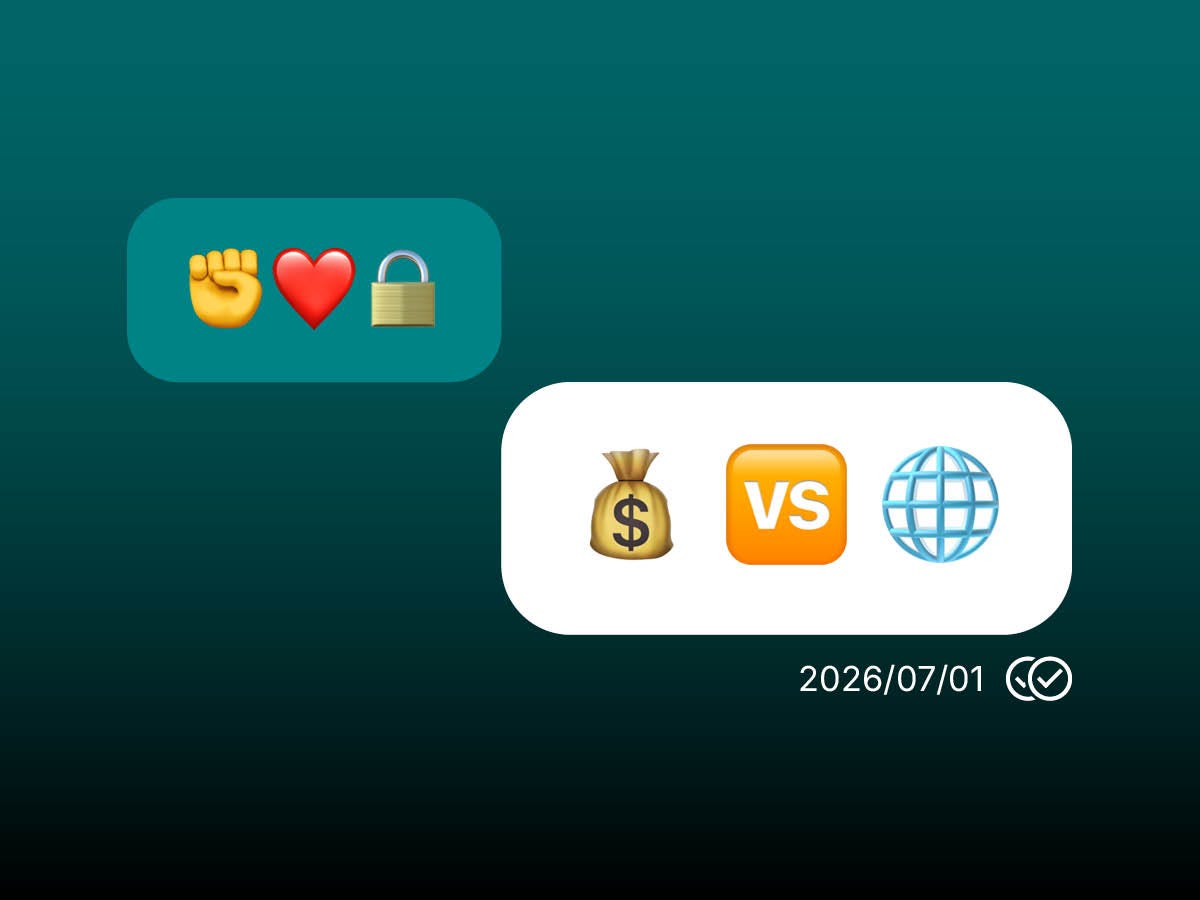
Two different approaches, same result for users
In the first post of the “Own Your Data” series, I analyzed the clash between Apple and Brussels over the failure to launch Siri AI in the European Union. Now it’s Meta AI’s turn, and history is repeating itself with variations that reveal a great deal about the true nature of the problem. The European Commission has required Meta to allow rival AI assistants to operate within WhatsApp at no cost. Until October 2025, the company allowed this access. Then it began charging a fee. For Brussels, this is unacceptable: it amounts to hindering competition in a market where WhatsApp clearly dominates.
Here, a fundamental difference emerges compared to Apple. Apple argued that only it could guarantee high standards of privacy, demanding a central oversight role. Meta, on the other hand, lacking the same level of control over hardware and the operating system as Apple and Google do with their smartphones, simply monetized access. The message is the same: no control without exploitation or payment.
Who controls the data? The question that remains unanswered
Both cases raise an uncomfortable question: What does interoperability really mean? If Apple wants to protect privacy through its own platform, and Meta seeks to monetize every external connection, does the user actually gain anything, or do they simply remain a pawn on the chessboard?
The DMA aims to break up digital monopolies. This principle deserves respect. But the question no one seems to be asking is: Who controls our data when these integrations take place? A third-party AI assistant entering WhatsApp will collect messages, conversational context, and habits. Who guarantees that this data won’t be stored, profiled, or sold? Interoperability is freedom, yes, but freedom from what – and for whom?
Apple says its ecosystem offers better protection. Meta says its model is economically sustainable. Both responses make sense, but neither addresses the user’s real need: to know that their data belongs solely to them.
When regulation becomes a geopolitical battleground
In my previous article, I wrote that the EU, China, and the U.S. are taking diametrically opposed approaches to Big Tech. The EU stifles innovation by demanding regulatory compliance. China imposes rules without negotiation. The U.S. protects national and economic interests. In all three cases, the end user bears the consequences without having a say in the matter.
This Meta-EU case confirms this argument. The Commission is making a decision that redistributes economic power among AI platforms. Is it justified from an antitrust perspective? Probably yes. But does it truly protect the data sovereignty of individual European citizens? The answer remains ambiguous.
The direct consequence is that the data from our WhatsApp conversations could end up in systems managed by unknown third parties. I don’t know what the selection criteria are for these compatible assistants. I don’t know if they will be certified as GDPR-compliant. I don’t know if they will retain copies of my information after processing it. These questions remain unanswered, and they are precisely the ones that should guide the public debate before imposing new technological changes.
The missing principle: data sovereignty as a fundamental right
Data sovereignty should be a fundamental human right, not merely a technical issue. If we apply this principle to the cases of Apple and Meta today, clear contradictions emerge.
In Apple’s case, the company claims to want to protect privacy while remaining the sole accessible guarantor. In Meta’s case, the company is opening up the platform but without transparent oversight of the new operators it allows. In both cases, individual self-determination takes a back seat to corporate interests or external regulatory balances.
It’s paradoxical: we fight against data extraction by traditional tech giants, only to then rely on alternative ecosystems governed by the same centralized logic. The only real solution would be to build decentralized systems where every individual fully owns their own information profile, without intermediaries deciding which services can access it and under what conditions.
I cannot expect every reader to immediately embrace radical solutions. I can, however, invite everyone to ask themselves three concrete questions:
How much do I trust European regulations to protect my data from Big Tech?
Would I accept third parties accessing my private conversations through integrated APIs?
Would I really like to control for myself which services can read my information?
The answers depend on personal values. For some, prioritizing innovation and competition is worth the risk of greater exposure. For others, maintaining absolute control above all other considerations is a priority. Neither position is wrong, but we must recognize them as such.
The concept of Data Sovereignty in the Meishi Manifesto is missing here. If access to our data is restricted for commercial, regulatory, power, or security reasons, are we owners or just renters of our own lives? Data Sovereignty isn’t a gift – it’s a right we build ourselves. While you wait for the next post, I ask you:
Who do you want to control your data?
5–7 Big Tech companies
200+ governments
You
Choose wisely!
✊❤️🔒
Own Your Data
Marco Parisi